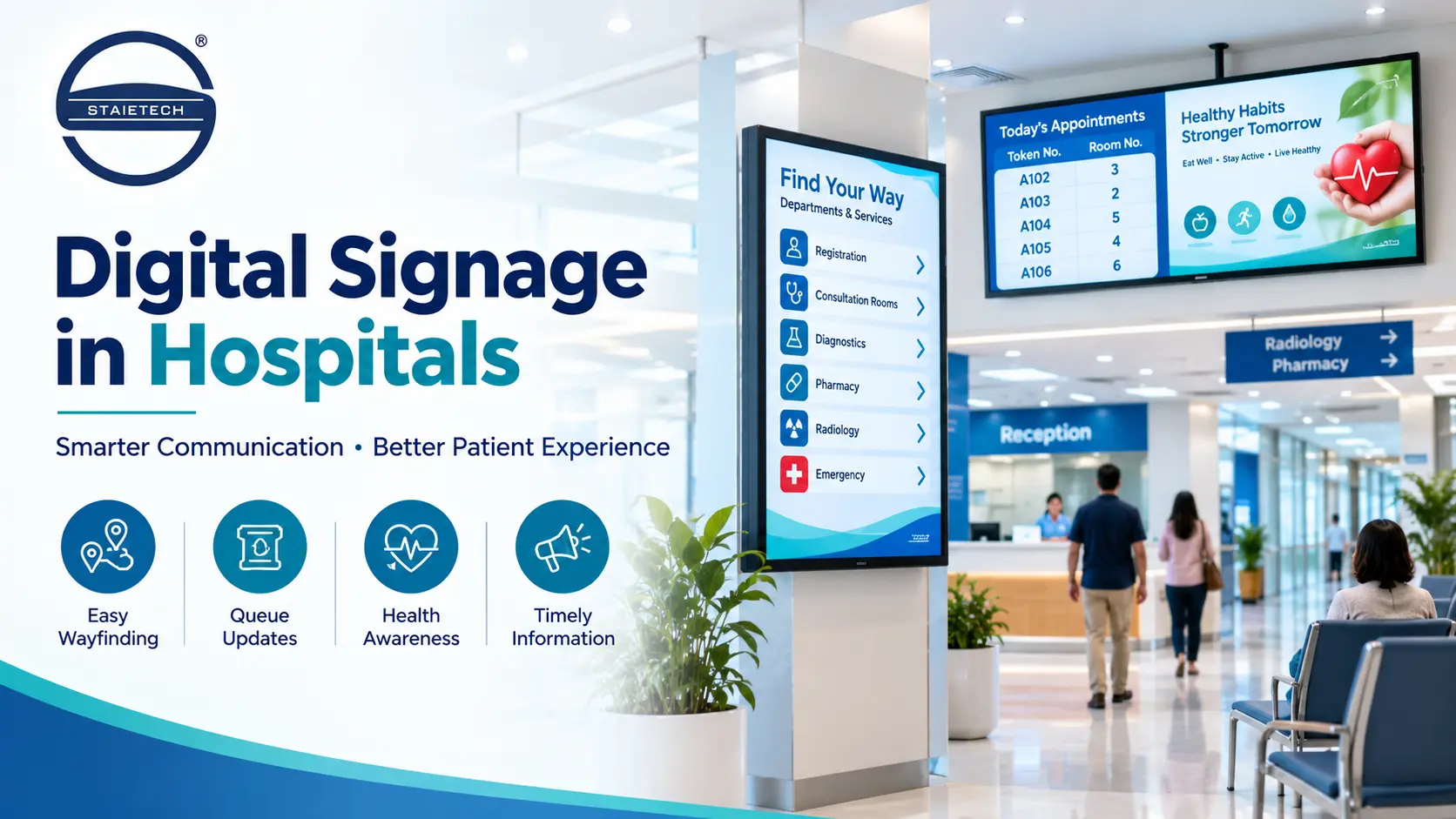
Effective communication is essential in healthcare facilities. Patients need clear directions, visitors need timely information, and hospital staff must communicate important updates without creating confusion. However, traditional communication methods, such as printed notices, static signboards, and paper-based announcements, can be difficult to update and maintain in busy healthcare environments.
Digital technology is changing how hospitals share information. Digital displays allow healthcare facilities to communicate updates, provide directions, display health awareness messages, and improve the overall patient experience. As a result, hospital digital signage is becoming a valuable solution for modern healthcare communication.
In this blog, we will explore how digital signage works in hospitals, its major benefits, practical applications, and the factors healthcare facilities should consider when choosing a suitable display solution.
What Is Digital Signage in Hospitals?
Digital signage is a communication system that uses electronic screens to display information such as text, images, videos, announcements, schedules, and educational content. These screens can be installed in hospital entrances, reception areas, waiting rooms, corridors, pharmacies, and other high-traffic locations.
Unlike traditional signboards, digital displays can be updated remotely through compatible content management software. This allows hospital administrators to change messages without printing new materials or physically replacing notices.
Depending on the requirements, hospitals can use LED displays, commercial screens, interactive kiosks, and other digital display solutions to share relevant information with patients, visitors, and employees.
Also Read: Digital Touch Table: Features, Benefits, Applications and Buying Guide
How Digital Signage Is Transforming Hospital Communication
1. Improving Patient Navigation and Wayfinding
Hospitals often have multiple departments, diagnostic laboratories, consultation rooms, pharmacies, emergency units, and specialised treatment areas. For first-time visitors, finding the correct location can be stressful.
Digital signage helps patients and visitors navigate these complex environments by displaying department names, floor directories, directional arrows, and location maps. Screens positioned at entrances and major intersections can make it easier to identify the correct route.
Interactive displays can provide additional navigation options, allowing users to search for a department or service and view directions.
By improving wayfinding, hospital digital signage can reduce confusion and help reception teams spend less time answering routine direction-related questions.
2. Reducing Perceived Waiting Time
Waiting for a consultation, diagnostic test, or medical procedure can be frustrating, particularly when patients do not know what to expect.
Digital screens in waiting areas can display queue information, general announcements, health education videos, and useful hospital updates. Where integrated with suitable queue management software, displays may also show token numbers or service counters.
Providing relevant information and engaging content can make waiting areas feel more organised and informative.
However, patient names, medical details, and other sensitive information should not be displayed publicly without an appropriate legal basis and privacy safeguards.
3. Sharing Health Awareness and Educational Content
Hospitals play an important role in educating people about preventive healthcare, healthy habits, and disease awareness.
Digital signage makes it easier to communicate these messages through visual content. Screens can display information about vaccination programmes, hygiene practices, seasonal illnesses, nutrition, physical activity, and preventive health check-ups.
For example, a hospital may display hand hygiene instructions near entrances, vaccination information in paediatric areas, or general nutrition guidance in outpatient waiting rooms.
Content can be adapted to different departments and audiences, helping healthcare facilities share relevant educational messages in an accessible format.
4. Communicating Real-Time Hospital Updates
Hospital operations can change throughout the day. Departments may adjust their schedules, clinics may experience delays, and certain areas may become temporarily unavailable.
Digital displays allow authorised staff to update announcements quickly across connected screens. Instead of replacing multiple printed notices, administrators can publish revised information through a central content management platform.
For example, reception screens can communicate changes in consultation schedules, while corridor displays can direct visitors toward an alternative route when a particular area is closed.
For emergency communication, digital signage should complement—not replace—official emergency alarms, staff instructions, and established safety procedures.
5. Enhancing the Patient and Visitor Experience
A hospital visit can involve uncertainty, particularly for people who are unfamiliar with the facility. Clear communication helps patients understand where to go, what services are available, and where they can find assistance.
Digital signage can display hospital service information, visiting hours, registration instructions, pharmacy locations, and general visitor guidelines.
Well-designed screens also help hospitals present information consistently across different departments. When the content is clear, readable, and regularly updated, patients and visitors can access important information with greater confidence.
For healthcare facilities focused on patient-centred service, digital communication can become an important part of the overall visitor experience.
6. Supporting Multilingual Communication
Hospitals frequently serve people who speak different languages. Language barriers can make it difficult for patients to understand directions, registration procedures, or general health information.
Digital displays can present messages in multiple languages, either through rotating slides or dedicated screens in relevant locations. Simple wording, readable typography, clear icons, and suitable visual instructions can improve accessibility.
Hospitals should also consider screen height, text size, colour contrast, and accessibility needs when designing their digital communication system.
For critical medical instructions, digital signage should support direct communication with qualified healthcare professionals rather than serve as a substitute for personalised guidance.
Key Applications of Hospital Digital Signage
Digital signage can support different communication requirements throughout a healthcare facility.
- Reception and registration areas: Display registration procedures, department directories, service information, and visitor instructions.
- Waiting rooms: Share health awareness videos, queue updates, general announcements, and patient education content.
- Emergency departments: Communicate general directions, service information, and authorised operational updates without interfering with emergency protocols.
- Pharmacies and diagnostic centres: Display service instructions, operating hours, and general information about available facilities.
- Hospital corridors and elevators: Provide floor directories, directional guidance, and information about departments.
- Staff areas: Share internal announcements, training reminders, meeting schedules, and operational notices through appropriately managed screens.
Selecting the right display for each location helps ensure that information reaches its intended audience.
Benefits of Hospital Digital Signage
Implementing digital signage can provide several operational and communication benefits:
- Faster content updates: Administrators can change approved messages through compatible software.
- Consistent communication: Connected screens can display standardised information across multiple departments.
- Reduced printing requirements: Frequently updated notices may require less paper and physical replacement.
- Improved visibility: Large, bright displays can make important information easier to notice when appropriately selected and positioned.
- Better visitor guidance: Directories and wayfinding information can help people navigate hospital facilities.
- Flexible content management: Different messages can be scheduled for specific screens, departments, or times.
The actual benefits depend on screen placement, content quality, staff training, system integration, and ongoing maintenance.
How to Choose the Right Hospital Digital Signage Solution
Before investing in digital signage, healthcare administrators should assess their communication needs and installation environment.
- Display type and size: Select commercial screens, LED displays, or interactive kiosks according to viewing distance, lighting conditions, and intended use.
- Content management: Choose a platform that allows authorised personnel to update content efficiently and manage multiple screens where required.
- Reliability: Hospital displays may operate for extended hours, so consider suitable commercial-grade hardware, warranty coverage, and maintenance support.
- Accessibility: Ensure that text is readable, messages use clear language, and the content is accessible to people with different needs.
- Privacy and security: Restrict system access, use appropriate network security measures, and avoid exposing confidential patient information on public displays.
- Integration: Where required, assess compatibility with queue management systems, scheduling platforms, or other hospital software before purchasing.
A carefully planned installation can help hospitals establish a practical and dependable communication system.
Why Consider STAIETECH LLP for Digital Display Solutions?
STAIETECH LLP offers digital display and interactive technology solutions for businesses and organisations that need modern visual communication systems. Healthcare facilities evaluating digital signage can explore suitable commercial displays, interactive screens, and related solutions according to their installation requirements.
When planning a hospital digital signage project, it is important to consider screen placement, viewing distance, content management, operating schedules, and the type of information being communicated. Choosing an appropriate solution helps create a more organised and informative environment for patients, visitors, and hospital staff.
Conclusion
Digital signage is transforming hospital communication by making information easier to update, access, and understand. From patient navigation and waiting-room communication to health education and operational announcements, digital displays can support a wide range of healthcare requirements.
With thoughtful planning, accessible content, reliable hardware, and appropriate privacy safeguards, hospital digital signage can help healthcare facilities improve information delivery and create a more organised patient experience.
For organisations exploring modern digital communication technology, STAIETECH LLP can be considered when evaluating display solutions suited to their specific requirements.